Climate
Climate change, it's consequences and possible causes, is the topic of much current public debate, but it is not new. At its peak, the last glacial period, which occurred about 22,000 years ago, saw glacial cliffs, along what today is the course of the M4 motorway between Bristol and London. The ice extended across into continental Europe, with areas such southern France being a a cold tundra like environment. Such oscillations are believed to have been occurring for millions of years. The controversy of climate change is that, if we are on the cusp of a substantive change, then how much of that change will be as a direct result of human activity. Evidence suggests quite a lot.
Oscillating Climates
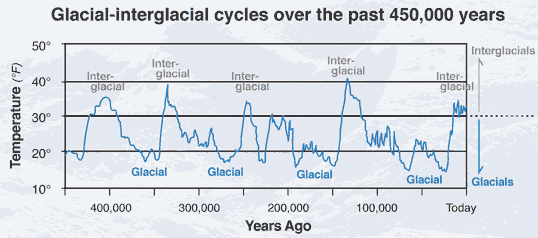
As far as earth history is concerned, we are still currently in an Ice Age which is referred to as the Quaternary. It just so happens that within each Ice Age, there are intermittent warm periods called interglacials. The one we are experiencing at the moment is called the Holocene. This warm period started around 10,000bc and followed a previous cold period that began about 110,000 years ago, reaching it's glacial maximum, about 25,000 years ago.
Based on evidence gathered from changes in sea level, in last 800,000 years there have been 11 interglacial periods, each one warming the land but each one to a different degree. Sometimes favourable to human life, sometimes not.
Ice Age Britian
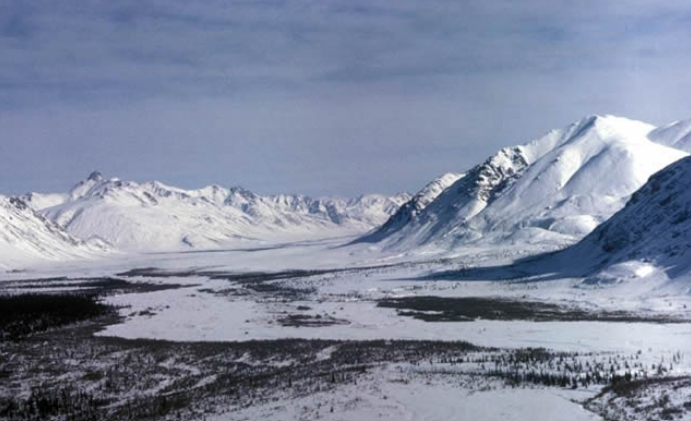
The history of the human family stretches back 2 million years, during which time, the Quaternary has delivered around 30 warm interglacials, each one 'book-ended' by a cold glacial period. During the ebb and flow of these glacial periods, Britain has moved between being an Island and being part of mainland Europe. Populations of plants and animals have moved northwards to cover the land and then retreated as the glaciers advance. Human populations followed the same pattern.
Some of the oldest evidence for the human occupation of Europe comes from East Anglia. Here at two sites, Happisburgh and near by Pakefield, comes evidence of human occupation at around 800,000 years ago. These humans were definitely not a Sapiens or a Neanderthal, for at this point in time such species did not exist. They were probably Homo Erectus enjoying the fruits of a warm inter-glacial. That warm spell ended around 650,000 years ago. We now know that before the most recent glacial period ( 110 kya to 14kya), there were humans living in Britain, but as the ice advanced, they left. Eventually they returned about 10,000 years ago (ref Cheddar Man). These were Homo Sapiens, belonging to culture called the 'Magdalenian', and represented the last phase of the Paleolithic era.
Drivers of Weather
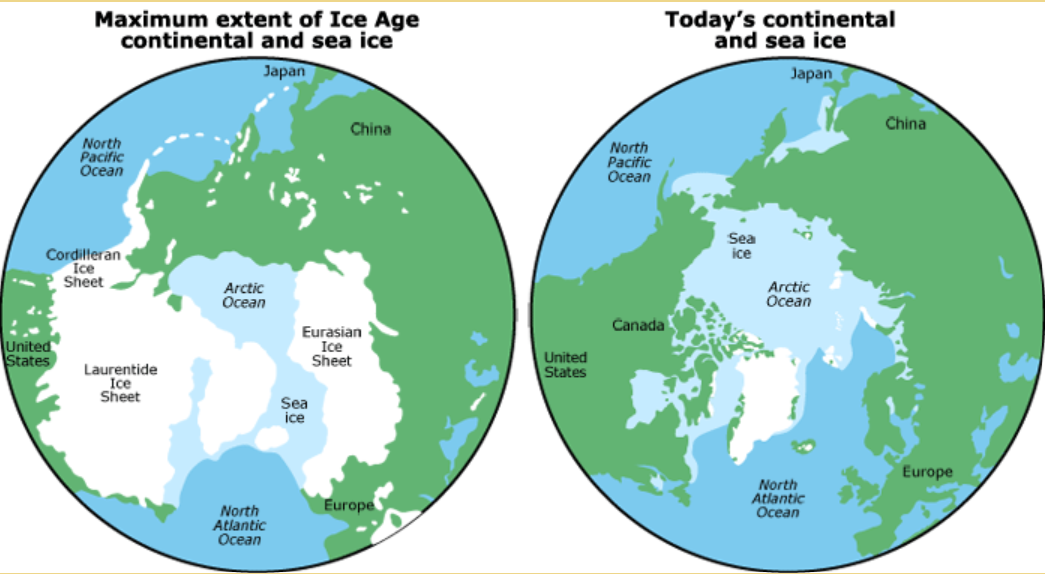
The timescale we are considering extends back some 2 million years. As the weather patterns change, so ice sheets expand and shrink, mountains rise and erode, fertile lands become deserts and sea levels rise and fall.
For any given part of the planet, over time it's geography would have changed significantly. It is volcanism and the weather that drive that change.